







 Nanah Usman

The Anambra State Government has requested N70 billion from the Federal Government’s Stabilisation Fund to address insecurity, erosion, infrastructure deficits and mounting pressure on public services.
The request is undergoing technical review by the Revenue Mobilisation, Allocation and Fiscal Commission (RMAFC), which is assessing the state’s financial records, proposed projects and expected economic and social benefits before making recommendations.
Secretary to the State Government, Chiamaka Nnake, presented the request to RMAFC’s Indices and Disbursement Committee in Abuja, explaining that the proposed intervention would support security, environmental protection, healthcare, education, agriculture, solid minerals and tourism.
Nnake said Anambra had an estimated population of 8.9 million, a projected 2026 budget of N766 billion and a gross domestic product of approximately $12.7 billion.
She added that the state had increased its internally generated revenue from about N2.2 billion to N7.2 billion but continued to face financial pressure from insecurity, flooding, erosion, inflation and rising public service costs.
More than 1,000 erosion sites identified
Erosion remains one of the major environmental challenges highlighted in the state’s presentation.
Nnake disclosed that Anambra had more than 1,000 erosion sites affecting 146 communities to varying degrees.
She estimated that about N170 billion would be needed to address identified critical sites.
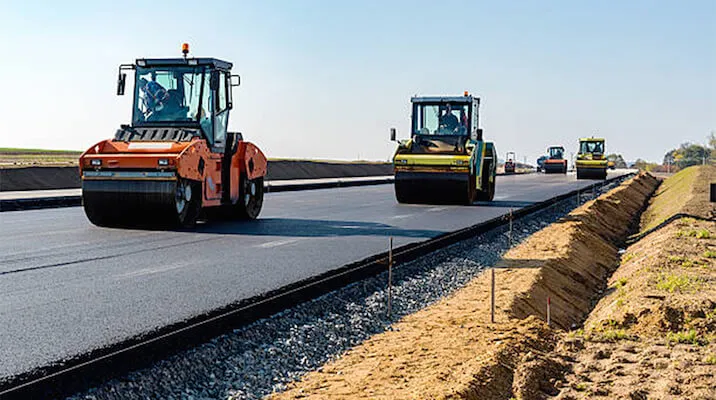
The state said its ongoing and proposed responses include erosion control, flood management, road rehabilitation, land reclamation, waterway clearance and tree planting. It has also introduced restrictions on sand mining in vulnerable areas.
The estimated cost of tackling critical erosion sites exceeds the N70 billion intervention being sought, underscoring the scale of the funding challenge facing the state.
Security and public services among priorities
The state government also wants the proposed funding to strengthen security operations through the procurement of operational vehicles, surveillance and communication equipment, personnel training and improved coordination among security agencies.
Nnake said the government had enacted a Homeland Security Law, established a state security outfit and strengthened joint security operations.
She also linked insecurity and sit-at-home orders to disruptions in commercial activities, reduced government revenue and weakened investor confidence.
Healthcare and education are other priorities. Nnake said the state’s free antenatal care and delivery programme had supported more than 206,000 deliveries, including 642 Caesarean sections, without charge to beneficiaries.
She also cited the recruitment of 8,415 teachers and the provision of free education from nursery school through Senior Secondary School Three, noting that the programmes had increased demand for personnel, equipment and other public services.
Agriculture and tourism included in funding plan
Beyond immediate security and environmental needs, Anambra wants to use the proposed intervention to support economic diversification.
Nnake disclosed that the state had distributed more than 2.3 million coconut and oil-palm seedlings.
She said further investment in processing, storage, irrigation and market access would help improve agricultural productivity, reduce post-harvest losses and create employment.
The state also identified mineral resources, including kaolin, bentonite, lignite, silica sand, gypsum and laterite, as potential sources of economic activity.
Tourism attractions such as Agulu Lake were also highlighted as opportunities for investment and revenue generation.
RMAFC says request is not yet approved
RMAFC committee chairman and Lagos State representative, Professor Olusegun Adekunle Wright, said the Stabilisation Fund was designed to provide assistance in deserving circumstances, subject to established guidelines, available resources and the required approvals.
He stressed that the technical review did not mean the N70 billion request had been approved.
The commission will examine the credibility of the state’s financial records, project costs, feasibility, implementation requirements and expected benefits before making recommendations.
Further verification and approval procedures will be required before any funding decision is reached.
The outcome of the review will determine whether Anambra’s request advances through the commission’s approval process.
Until then, the proposed N70 billion remains a funding request rather than an approved allocation.