











 Anirudh Kumar
Artificial intelligence has moved from science fiction to daily infrastructure in barely a decade — powering search engines, hiring decisions, medical diagnoses, and increasingly, the words on this page. That speed is exactly what worries many researchers, ethicists, and policymakers. The dangers aren’t limited to a single dramatic scenario; they range from problems already happening today to risks that could compound over the coming years.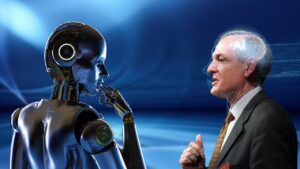
1. Job Displacement and Economic Disruption
AI systems are increasingly capable of automating tasks once considered safely human — from customer service and data entry to legal research, coding, and creative work. Economists differ sharply on the scale of the disruption, but there’s broad agreement that certain roles will shrink faster than new ones emerge to replace them, and that cognitive and creative work no longer offers the safe harbor it once did.
REAL-WORLD INCIDENT In May 2023, IBM CEO Arvind Krishna announced a hiring freeze for roughly 26,000 back-office roles, estimating that 30 percent of them — about 7,800 jobs — could be replaced by AI and automation within five years, starting with tasks like processing employment letters and internal transfers. |
2. Misinformation and Erosion of Trust
Generative AI makes it cheap to produce convincing fake text, images, audio, and video at scale. Beyond individual hoaxes, the deeper danger is a general erosion of trust — when anything can plausibly be faked, it becomes harder for societies to agree on basic facts, which corrodes journalism, elections, and public discourse.
REAL-WORLD INCIDENT In early 2024, a finance employee at a multinational firm’s Hong Kong office was convinced to transfer HK$200 million (about US$25.6 million) after joining a video call where every other “colleague” present — including someone posing as the company’s CFO — was a real-time deepfake built from publicly available footage. Hong Kong police called it the first case of its kind in the city. |
3. Bias and Discrimination at Scale
AI systems learn from historical data, and historical data often encodes existing social biases — in hiring, lending, policing, and healthcare. When a biased model is deployed at scale, it doesn’t just repeat human bias; it systematizes and amplifies it, applying the same skewed judgment to millions of decisions with a veneer of algorithmic objectivity that makes the bias harder to spot and contest.
REAL-WORLD INCIDENT Amazon scrapped an internal AI recruiting tool in 2018 after discovering it had taught itself to downgrade résumés containing the word “women’s” and penalize graduates of all-women’s colleges, having been trained on a decade of résumés submitted mostly by men. Separately, a 2016 ProPublica investigation found that COMPAS, a risk-assessment algorithm used in U.S. courts, flagged Black defendants as high-risk at nearly twice the rate of white defendants who went on not to reoffend. |
4. Surveillance and Loss of Privacy
AI-powered facial recognition and behavioral prediction give governments and corporations unprecedented ability to track and profile individuals. Even in democracies, the combination of ubiquitous cameras, smartphone data, and AI pattern-matching raises serious questions about whether meaningful privacy can survive without deliberate legal limits.
REAL-WORLD INCIDENT Clearview AI built a facial-recognition database of more than 20 billion images scraped from social media and the open web without consent, then sold access to law-enforcement agencies. Data regulators in the UK, France, the Netherlands, and Australia have all fined the company — including a £7.5 million penalty in the UK and a €30.5 million fine in the Netherlands — for unlawful data collection. |
5. Concentration of Power
Building and running frontier AI systems requires enormous computing resources, data, and capital — resources concentrated in a small number of companies and countries. This raises the risk that AI’s economic and political power accrues disproportionately to a few actors, potentially widening inequality between AI-rich and AI-poor nations, companies, and individuals.
6. Autonomous Weapons and Military Escalation
Militaries around the world are investing in AI-enabled weapons systems, drones, and decision-support tools. Delegating target selection to machines raises both ethical concerns and strategic ones — faster decision cycles could compress the time available for de-escalation during a crisis.
REAL-WORLD INCIDENT In 2024, an investigation by +972 Magazine and Local Call reported that the Israeli military used an AI system called “Lavender” to help generate tens of thousands of potential targets during its campaign in Gaza, with sources describing minimal human review and an acknowledged error rate. The Israeli military disputed this characterization, describing Lavender as a cross-referencing database rather than an autonomous targeting system, and said analysts independently verify each target against international-law criteria. The episode remains contested, but illustrates the live debate over how much human judgment should sit between an AI recommendation and a lethal decision. |
7. Misuse for Cyberattacks and Bioweapons Research
AI can lower the barrier to causing serious harm by helping less-skilled actors write malware or craft convincing scams. This “uplift” risk is one reason AI labs restrict what their models will help with.
REAL-WORLD INCIDENT In 2023, security researchers at SlashNext discovered “WormGPT,” a chatbot built on an open-source language model and stripped of safety guardrails, being sold on cybercrime forums for as little as $67 a month specifically to generate malware code and persuasive phishing and business-email-compromise scams. Variants built on other openly available models have continued to surface on underground forums since. |
8. Loss of Human Oversight Over Complex Systems
As AI systems are integrated into critical infrastructure and decision-making pipelines, there’s a growing risk that humans lose meaningful understanding of — and control over — how key decisions are actually being made, even without malicious intent.
REAL-WORLD INCIDENT In March 2018, an Uber self-driving test vehicle operating in autonomous mode struck and killed 49-year-old Elaine Herzberg as she crossed a street in Tempe, Arizona — the first pedestrian death involving a self-driving car. Investigators found the system detected her but was not designed to reliably classify a pedestrian crossing outside a crosswalk, and that emergency braking had been disabled in that mode; the human safety operator was not watching the road at the moment of impact. |
9. Long-Term and Existential Concerns
A smaller but influential group of researchers argues that sufficiently advanced AI systems could eventually pose risks to humanity’s long-term survival or ability to shape its own future — whether through systems pursuing misaligned goals, rapid capability gains that outpace governance, or destabilizing effects on international security.
REAL-WORLD INCIDENT In May 2023, hundreds of AI scientists and executives — including the heads of OpenAI, Google DeepMind, and Anthropic — signed a one-sentence statement from the Center for AI Safety declaring that “mitigating therisk of extinction from AI should be a global priority alongside other societal-scale risks such as pandemics and nuclear war.” The statement remains debated: some see it as an overdue acknowledgment from people closest to the technology, others as a distraction from more immediate, documented harms. |
At a Glance
A quick reference connecting each risk to the real-world case that illustrates it:
Danger | Real-world example |
Job displacement | IBM freezes hiring for ~7,800 roles it expects AI to replace (2023) |
Misinformation | $25.6M Hong Kong deepfake video-call scam (2024) |
Bias & discrimination | Amazon scraps biased hiring AI; COMPAS racial bias in U.S. courts |
Surveillance | Clearview AI fined across UK, France, Netherlands, Australia |
Autonomous weapons | “Lavender” AI targeting system reported in Gaza (2024, disputed) |
Cyberattacks | WormGPT sold on cybercrime forums for phishing & malware (2023) |
Loss of oversight | First pedestrian death by self-driving car, Tempe, AZ (2018) |
Existential risk | CAIS extinction-risk statement signed by AI lab leaders (2023) |
The Other Side of the Debate
It’s worth noting this isn’t a settled question. Many researchers and technologists argue that AI’s benefits — in medicine, scientific research, education, and productivity — could be transformative, and that many of the risks above are manageable with the right regulation, technical safeguards, and institutional design, rather than being inherent to the technology itself. Others argue the existential-risk framing distracts from more immediate, concrete harms like bias and job loss. Reasonable, well-informed people land in very different places on how urgent each of these risks is — which is itself part of why AI governance remains such a difficult and active area of debate.
Sources: World Economic Forum reporting; Bloomberg; ProPublica; +972 Magazine / Local Call; SlashNext; UK Information Commissioner’s Office; French CNIL; Dutch DPA; U.S. National Transportation Safety Board; Center for AI Safety.

 Nanah Usman
 Yaro Insider